Key Priorities for Commercial Electrical Infrastructure
In heavy manufacturing facilities, chemical processing units, and high-voltage sub-stations, electrical infrastructure operates under continuous thermal and mechanical stress. An electrical arc or insulation breakdown can rapidly trigger a localized fire. If the containment system isn’t engineered to handle extreme heat, the conduit network itself can act as a fuse line, spreading flames rapidly across walls, ceiling grids, and adjacent machinery.
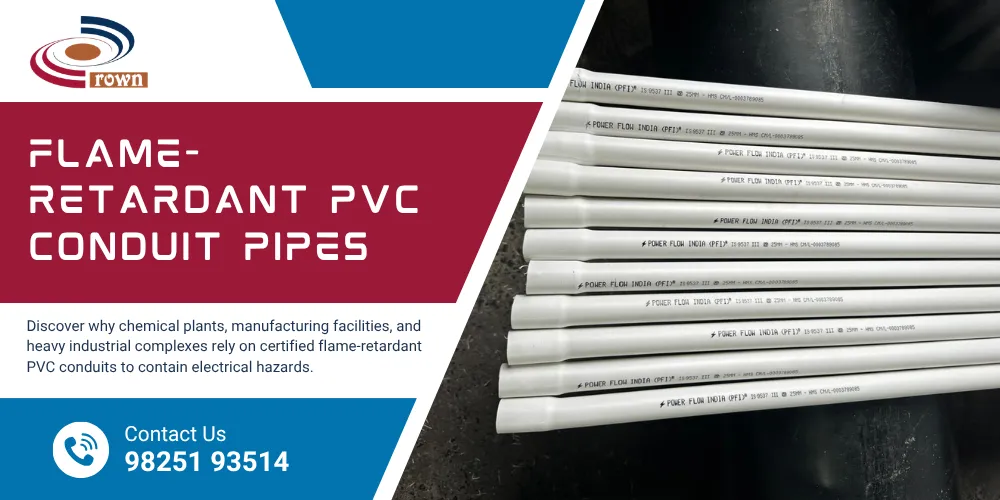
To mitigate catastrophic industrial hazards, plant engineers and electrical contractors mandate the use of flame-retardant PVC conduit pipes. As a leading manufacturer, supplier, and exporter, Crown Industries formulates specialized polymer compounds engineered to self-extinguish, halt flame propagation, and preserve structural containment during electrical emergencies.
The Chemistry Behind Flame-Retardant PVC Conduits
Standard polymers can ignite easily and sustain combustion. In contrast, specialized industrial PVC conduits incorporate advanced chemical additives that alter the material’s behavior under extreme heat:
- Self-Extinguishing Properties: When exposed to direct flame, high-grade PVC releases chlorine radicals that neutralize the chemical reaction driving the fire. Once the external heat source is removed, the material stops burning immediately.
- Char Formation Mechanism: Under high temperatures, the polymer surface develops a thick carbonized char layer. This layer acts as a thermal barrier, insulating the interior cables and cutting off oxygen flow.
- Low Smoke Density and Toxicity: Specialized fire-safe compounds reduce dense smoke emission, allowing plant personnel to maintain visibility along evacuation routes during emergency shutdowns.
For a technical breakdown on quality benchmarks and compliance standards governing industrial piping, explore our guide on ISI vs. Non-ISI PVC Conduit Pipes: Choosing the Right Standard for Industrial Safety.
Critical Applications in High-Risk Industrial Environments
Flame-retardant conduits are essential across several core industrial sectors:
- Chemical & Petrochemical Processing: Protecting control lines and instrumentation feeds from external flash fires and corrosive chemical vapors.
- Commercial & Industrial Panel Facilities: Safeguarding primary supply feeds feeding into main distribution boards, as discussed in our analysis of PVC Conduits and Accessories in Electrical Control Panels.
- High-Density Wire Routing: Enclosing complex cable clusters alongside structured PVC ducts and securing internal bundles with high-tensile Nylon Cable Ties prevents heat traps inside wall chases and ceiling raceways.
Installation Best Practices for Maximum Fire Security
- Maintain Complete System Sealing: A flame-retardant pipe cannot stop fire if open joints allow oxygen entry. Always use precision-molded fittings bonded with industrial solvent cement to seal all connections.
- Avoid Mixed Material Lines: Never combine flame-retardant conduits with standard, non-rated plastic fittings or low-grade junction boxes.
- Partner with Factory-Direct Exporters: Direct sourcing from an established manufacturer, supplier, and exporter ensures lot-to-lot consistency and verified fire safety test certificates for large-scale industrial projects.