Key Priorities for Commercial Electrical Infrastructure
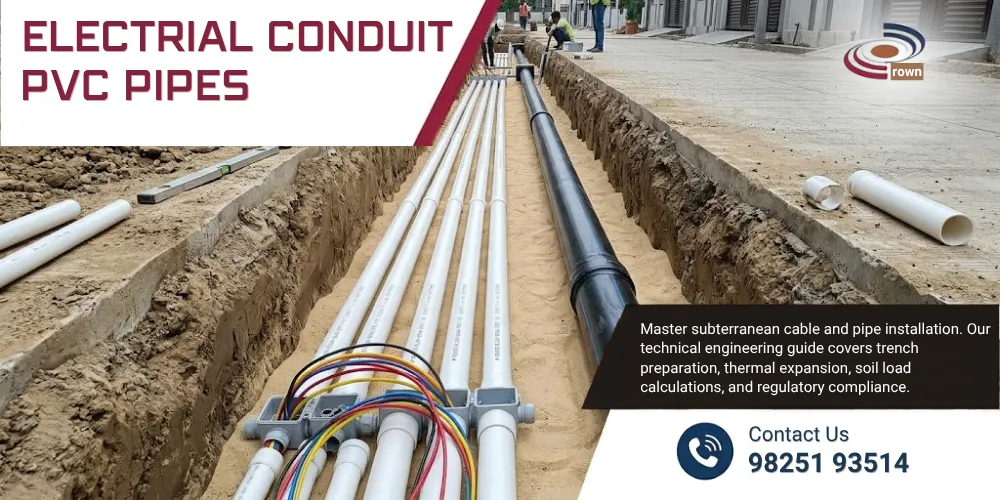
Laying electrical conduits and fluid pipelines underground requires precise engineering calculations. Once a trench is backfilled and buried beneath concrete, soil, or heavy traffic roads, correcting installation mistakes becomes extremely expensive. Subterranean piping systems must withstand heavy static earth loads, dynamic vehicular pressure, soil chemical reactions, and moisture ingress without collapsing or cracking.
Drawing from over two decades of technical manufacturing experience, Crown Industries compiles this authoritative guide to help civil contractors, MEP engineers, and utility technicians execute reliable, long-lasting underground conduit and pipe installations.
Technical Challenges of Underground Pipe Installations
Subterranean environments subject polymer pipes to complex physical stresses that above-ground runs never face:
- Soil Load & Compaction Strain: Deep trenches exert immense downward force. Substandard pipes without adequate wall thickness deform into ovals, choking internal cables or restricting water flow.
- Ground Movement & Seismic Activity: Shifting soil layers, thermal expansion, and water table changes put joint connections under continuous shear stress.
- Moisture & Chemical Ingress: Soil chemistry varies wildly. Piping must remain 100% inert to soil acidity, alkaline groundwater, and aggressive soil chemicals.
To select the correct material grades before digging, review our compliance breakdown in ISI vs. Non-ISI PVC Conduit Pipes: Choosing the Right Standard for Industrial Safety.
Step-by-Step Engineering Protocol for Trench Laying
1. Trench Depth and Bedding Preparation
Always excavate trenches below the local frost line and heavy vehicle load zones. As a standard engineering rule:
- Electrical Conduits: Minimum 24 inches (600 mm) depth under pedestrian areas; 36 inches (900 mm) beneath vehicular driveways.
- Bedding: Prepare a uniform 4-inch (100 mm) base bed of fine sand or crushed rock dust. Never lay pipes directly on jagged rocks or uneven trench bottoms.
2. Selecting the Right Material Category
- For Concealed Underground Electrical Wiring: Use heavy-duty ISI-certified PVC conduit pipes designed specifically for high compression resistance. Learn more about structural pipe classes in our Complete Guide to PVC Conduit Pipes: Types, Applications & Why ISI Certification Matters.
- For Underground Main Water Lines: Utilize fused flexible HDPE pipes or heavy-duty UPVC pressure pipes that handle continuous fluid pressure and ground settling without leaking.
- For Surface Access Points & Manholes: When bringing underground runs up into building walls, switch seamlessly to structured PVC casing capping or heavy-duty PVC ducts.
3. Solvent Welding and Joint Sealing
Apply industrial-grade PVC solvent cement uniformly across pipe ends and fittings. For electrical lines, using precision-molded Electrical PVC Pipe Fittings & Cable Accessories ensures a 100% watertight barrier against subterranean moisture. Fasten interior pull wires or signal cables using high-tensile Nylon Cable Ties before final closure.
4. Backfilling and Warning Tape Installation
Authoritative Engineering Summary
Building underground networks that survive for 50+ years requires zero compromises on material quality or installation discipline. By pairing verified manufacturing standards with strict trenching practices, infrastructure developers guarantee uninterrupted performance across generations.
As a globally trusted manufacturer, supplier, and exporter, Crown Industries provides factory-direct, certified polymer piping systems engineered to withstand extreme environmental stress.