When engineering complex electrical panels, running high-density conduit layouts, or managing large commercial surface trunking, installation safety goes far beyond the pipes themselves. Inside every enclosure, junction box, and PVC duct, keeping internal wire bundles tightly secured is the ultimate key to preventing long-term mechanical failure.
While technicians focus heavily on conduits and fittings, nylon cable ties serve as the unsung heroes of professional cable management. Using substandard fasteners can lead to snapping under thermal expansion, wire slippage, and dangerous terminal strain over time.
The Critical Role of Cable Ties in Electrical Infrastructure
In industrial and commercial environments, cables are constantly exposed to micro-vibrations, thermal fluctuations, and physical weight loads. Proper cable management delivers distinct engineering benefits:
- Strain Relief: Securing wire clusters prevents gravity and tension from pulling cables directly out of terminal blocks, eliminating loose connections that spark electrical faults.
- Thermal Management: Organizing wires into neat, uniform bundles allows optimal airflow inside control panels and raceways, preventing dangerous heat buildup.
- Vibration Resistance: In heavy machinery and industrial plants, constant equipment operation causes loose wiring to rub together, stripping insulation and causing short circuits. High-tensile ties lock every line firmly in place.
For a deeper look into how accessories work in tandem with pipes to seal systems against environmental hazards, review our guide on The Crucial Role of Electrical PVC Fittings and Cable Management Accessories.
Choosing the Right Nylon Material: Standard vs. UV-Resistant
Not all cable ties are manufactured for the same environment. Selecting the correct variant depends on installation conditions:
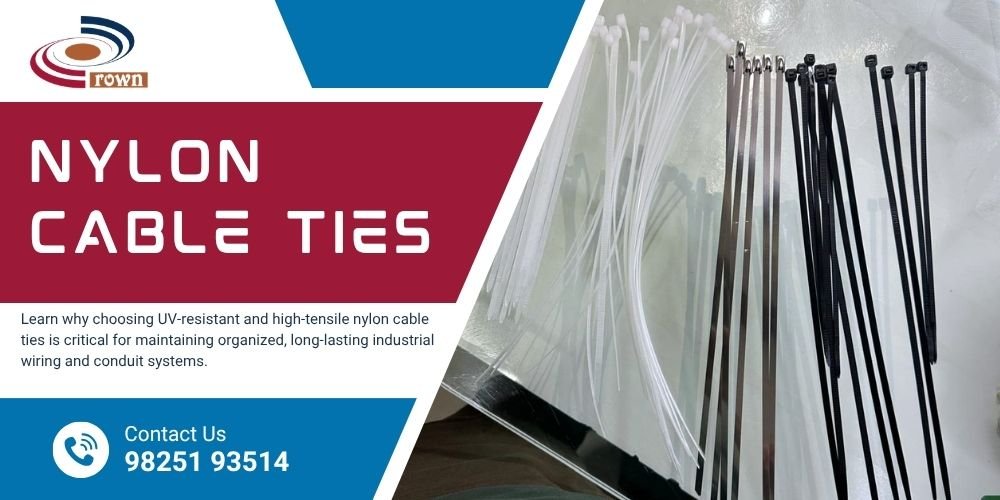
- Standard Indoor Nylon Ties (Nylon 6.6): Ideal for indoor control panels, office buildings, and concealed wiring inside PVC casing capping. They offer high tensile strength and resistance to standard operating temperatures.
- UV-Resistant Black Cable Ties: Designed for outdoor solar installations, exposed structural layouts, or areas subject to direct sunlight. Carbon black additives prevent the polymer from degrading under ultraviolet radiation.
Best Practices for Installing Cable Ties
- Do Not Over-Tighten: Pulling ties down with excessive pneumatic force can crush wire insulation or choke internal conductors. Tighten securely to hold bundles without deforming the outer jacket.
- Trim Cleanly: Always use flush-cutters to trim excess tails. Jagged or protruding plastic ends can scratch technicians or damage adjacent wire insulation during maintenance.
- Match Tensile Strength to Load: Use heavy-gauge ties for thick power feeds and standard-gauge ties for low-voltage signal or control lines.
Conclusion
Ready to secure your wiring projects with professional-grade fasteners?
Explore our certified range of Nylon Cable Ties and Electrical Accessories engineered for demanding industrial environments. Contact our team today for bulk product catalogs and commercial inquiries.